

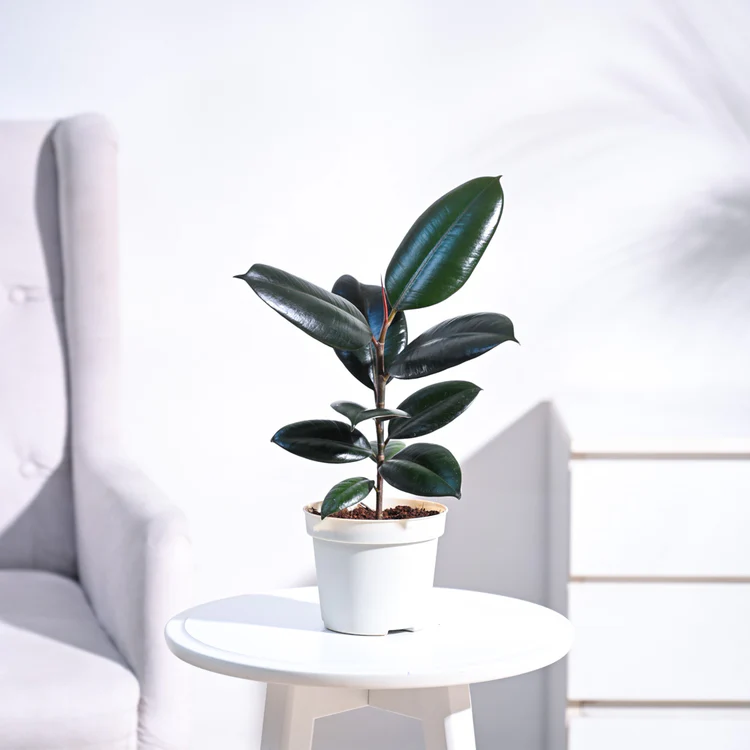
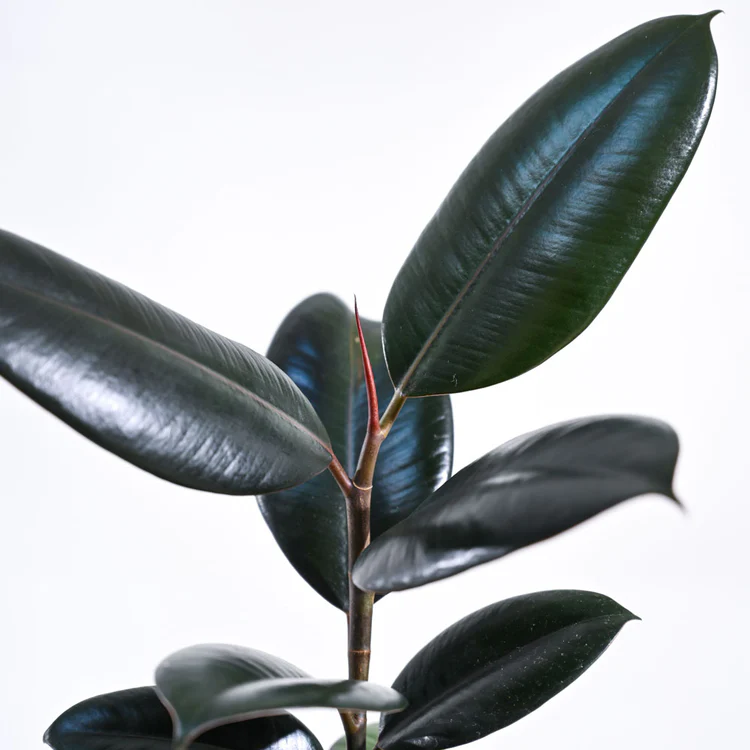
A Rubber Plant (Ficus elastica) is a popular indoor houseplant known for its glossy, large, and attractive leaves. It’s fairly low-maintenance, making it an excellent choice for both beginner and experienced plant enthusiasts. Here’s a guide to help you care for your Rubber Plant:
1. Light Requirements
- Bright, Indirect Light: Rubber Plants thrive in bright, indirect light. Place your plant near a window with filtered sunlight. Direct sunlight can scorch the leaves, leading to brown spots.
- Low Light: They can tolerate lower light conditions but may grow slower and have fewer leaves.
2. Watering
- Keep the Soil Slightly Moist: Water your Rubber Plant when the top 1-2 inches of soil feels dry to the touch. Be careful not to overwater, as this can lead to root rot.
- Watering Frequency: In the warmer months, this might be once a week or every 10 days, while in the winter months, the plant may need water less often.
- Good Drainage: Make sure the pot has drainage holes to prevent water from sitting at the bottom, which could cause root rot.
3. Temperature & Humidity
- Ideal Temperature: Rubber Plants prefer temperatures between 60-75°F (15-24°C). They should be kept away from drafts, cold windows, and air conditioning vents.
- Humidity: They enjoy higher humidity levels, so if you live in a dry environment, mist the leaves occasionally or place the pot on a humidity tray. Grouping plants together can also help raise humidity levels.
4. Potting & Soil
- Well-Draining Soil: Rubber Plants prefer slightly acidic, well-draining soil. Use a general-purpose potting mix or a mix formulated for indoor plants. You can also add perlite or sand to improve drainage.
- Repotting: Rubber Plants grow quite fast, so you may need to repot them every 1-2 years to provide more space for their roots. When repotting, choose a pot that’s 1-2 inches larger in diameter than the current one.
5. Fertilizing
- During Growing Season: Fertilize your Rubber Plant once a month during the spring and summer with a balanced, water-soluble fertilizer.
- Less Frequent in Fall and Winter: In fall and winter, reduce fertilizing since the plant is in a dormant phase and growing less actively.
6. Pruning & Cleaning
- Pruning: Regular pruning can help maintain the shape and size of your Rubber Plant. Use sharp, clean scissors or pruning shears to trim back any long or leggy stems. Cut just above a node (where a leaf meets the stem) to encourage new growth.
- Leaf Cleaning: Rubber Plants have large, shiny leaves that can accumulate dust. Wipe the leaves gently with a damp cloth or sponge to keep them clean and allow the plant to photosynthesize effectively. This also helps prevent pests.
7. Pests
- Common Pests: While Rubber Plants are relatively pest-resistant, they can occasionally suffer from pests like spider mites, mealybugs, and scale.
- Dealing with Pests: If you spot pests, you can gently wipe the leaves with a damp cloth or use insecticidal soap. Neem oil is also an effective organic option.
8. Common Problems and Solutions
- Yellow Leaves: If your Rubber Plant’s leaves are turning yellow, it could be a sign of overwatering, underwatering, or a nutrient deficiency. Check the soil moisture and adjust your watering schedule accordingly.
- Brown Leaf Tips: Brown tips on the leaves might be due to low humidity or inconsistent watering. Increase humidity or water more consistently.
- Leggy Growth: If the plant becomes leggy or spindly, it might not be getting enough light. Move the plant to a brighter location.
9. Propagation
- Rubber Plants can be propagated through stem cuttings.
- Cut a Healthy Stem: Use clean, sharp scissors or pruning shears to cut a healthy stem (with at least 2-3 leaves) just below a node.
- Let the Cutting Callus: Let the cutting sit for a few hours so the cut end can callus over (this helps prevent rot).
- Place in Water or Soil: You can either place the cutting in a jar of water or directly in moist, well-draining potting soil.
- Wait for Roots: If you’re propagating in water, change the water every few days until roots develop (typically 2-4 weeks). If propagating in soil, keep the soil moist and wait for new growth.
10. Growth and Size
- Rubber Plants can grow quite large in ideal conditions, reaching up to 10 feet indoors. However, most indoor Rubber Plants are kept smaller by pruning and repotting in smaller containers.
- Top-heavy growth: If your plant grows too large or top-heavy, you can prune it back, or stake it for support.
11. Toxicity
- Toxic to Pets: Rubber Plants are toxic to pets (especially cats and dogs) if ingested. The plant contains a latex-like sap that can cause mild to moderate irritation in the mouth and digestive tract. Keep it out of reach of pets.



Reviews
There are no reviews yet.